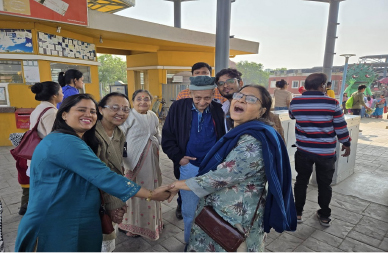
Best Practice in Kolkata, India
Implementing the Spark of Life Philosophy and Model of Care at ARDSI Calcutta Chapter
By Nilanjana Maulik, Spark of Life Master Practitioner, Kolkata, India
Secretary, ARDSI Calcutta
Fellow, Commonwealth Association for the Ageing
Secretary General
6th June, 2025

Introduction
The Alzheimer’s and Related Disorders Society of India (ARDSI) Calcutta Chapter has long been committed to fostering compassionate dementia care grounded in dignity, empathy, and personhood. In alignment with this mission, the chapter has made an effort to implement the Spark of Life Philosophy and Model of Care—an innovative, humanistic approach that focuses on awakening the human spirit, rekindling identity, and creating enriched environments where people with dementia can thrive. This report summarizes the journey of ARDSI Calcutta with its very limited resources and constraints, in giving its best to integrate the Spark of Life principles into its services, highlighting the education and mentoring provided, outcomes achieved, and aspirations for the coming year.
I. Education and Mentoring for Staff
The successful implementation of the Spark of Life Philosophy has been made possible through a culture of continuous learning.
- Regular Staff Training Modules included Spark of Life Philosophy
To embed Spark of Life principles, the emotional and relational underpinnings of the philosophy—emphasizing the importance of deep connection, positive language, validation, and the central concept of “uplifting the spirit” was reintroduced. Practical training at the daycare focused on role modeling, empathy exercises, and reflective caregiving. - Mentoring Circles
Monthly mentoring circles were established for staff at all levels—from housekeeping to to coordinators. These circles, led by senior trainers familiar with the Spark of Life Model, created safe spaces for caregivers to share experiences, challenges, and small victories. Reflective journaling, role-play, and peer feedback were integral to this process. - Family Involvement
Orientation sessions were conducted with family caregivers, focusing on how they can align their interactions at home with Spark of Life values—such as using affirming language, offering genuine choices, and engaging in shared reminiscence. Families reported increased confidence and emotional connection.
 II. Outcomes Observed
The application of the Spark of Life Philosophy has led to meaningful and measurable outcomes across all stakeholders—clients, staff, and families.
- Client Transformation
- Improved Emotional Well-being: Daycare as well as Home Care clients displayed more frequent expressions of joy, laughter, and affection. There was a noticeable reduction in anxiety and agitation, particularly in clients previously labeled as “withdrawn” or “difficult to engage.”
- Rekindled Identity: Staff began to tailor activities around each client’s life story, leading to renewed interest in music, storytelling, gardening, and prayer rituals. One client, formerly non-verbal, began humming along to familiar Bengali songs when gently engaged with warmth and eye contact.
- Enhanced Social Connection: Peer relationships deepened. Clients began initiating greetings, offering help to each other, and participating more actively in group events like our monthly “Misti Adda” (Sweet Chat) and memory-sharing circles.

2. Staff Engagement and Confidence
- Reduced Burnout: Caregivers reported feeling more purposeful and less fatigued. The philosophy helped shift their perception of dementia from “loss of function” to “presence of ability.”
- Empowered Communication: Staff gained confidence in using emotionally connecting language and learned how to respond to unmet needs with patience rather than redirection.
- Workplace Harmony: Teams became more collaborative, often sharing insights about what “lights up” each client and brainstorming meaningful engagement together.

3. Family Reconnection and Satisfaction
- Renewed Bonding: Several families noted a sense of emotional “reconnection” with their loved ones. One daughter shared that after weeks of disengagement, her mother smiled and held her hand again—“as if she recognized me from the heart, not the mind.”
- Greater Involvement: Families expressed interest in co-creating legacy scrapbooks and life-story albums, which became therapeutic tools and conversation starters.
- Positive Feedback: Satisfaction surveys via helpline showed a marked improvement in perceived quality of care, especially in emotional well-being and dignity of their loved ones.

III. Vision and Goals ahead
ARDSI Calcutta sees the Spark of Life Philosophy not as a program but as a transformational shift in culture. Our vision is to become a lighthouse of emotionally uplifting dementia care in our region. Ahead, we have identified a core goal to deepen and scale our implementation.
- Goal 1: Embed Spark of Life into All Services
- We aim to introduce the philosophy across all services—from mealtime routines to hygiene care—through the lens of emotional connection, choice, and dignity.
- The goal is to move from isolated instances of connection to a systemic, organization-wide commitment.
- Every team member, regardless of role, will have Spark of Life goals embedded into their appraisal and daily checklist.
2. Goal 2: Expand Community-Based Implementation
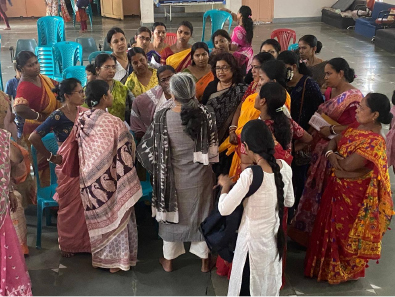
- We plan to take the essence of the philosophy in neighborhoods, working with trained volunteers and Anganwadi workers.
- Workshops and support circles will be offered in semi-rural and rural pockets in and around West Bengal.
2. Goal 3: Propose training for one dedicated staff
- The current master trainer is not able to fully dedicate in implementing the model due to her multiple responsibilities, hence one dedicated staff member to be identified who could take the Master Practitioner course and take up the role of active implementation of the model.
Conclusion
The journey of implementing the Spark of Life Philosophy at ARDSI Calcutta has been one of discovery, warmth, and deep human connection. What began as a training initiative has blossomed into a cultural transformation—changing the way caregivers see people with dementia, how families reconnect with their loved ones, and how clients begin to flourish again.
This approach has reminded us that even in the presence of cognitive decline, the spirit remains intact. With empathy, respect, and genuine presence, we can reignite joy, restore personhood, and foster a culture where everyone—clients, caregivers, and families—feels emotionally safe, valued, and loved.
As we move forward, ARDSI Calcutta remains committed to being a torchbearer of emotionally uplifting dementia care—not only within our own services but as a catalyst for change across India.